
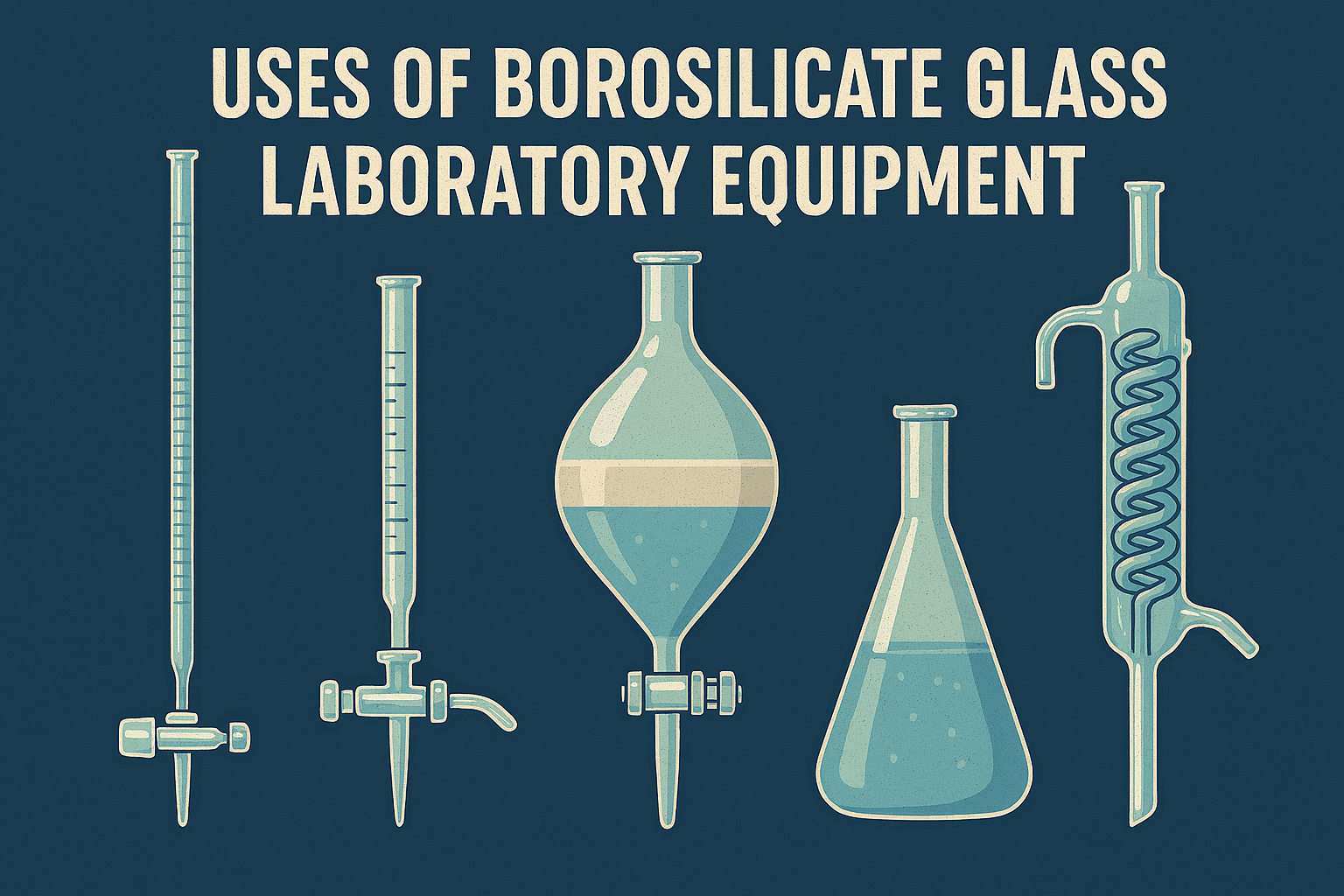
Borosilicate Glass Burettes, Separating Funnels, and Dimroth Condensers: Essential Laboratory Glassware and Their Uses
In any chemical laboratory, high‑quality glassware is essential for achieving accurate measurements, reliable separations, and consistent reactions. Among the most valuable pieces of equipment are borosilicate glass burettes, separating funnels with glass stopcocks, and Dimroth reflux condensers. These tools support a wide range of analytical and synthetic procedures, making them indispensable in academic, industrial, pharmaceutical, and research environments.
This guide explores the uses, advantages, and applications of each type of laboratory glassware, with SEO‑optimized insights to help researchers, lab managers, and educators choose the right equipment.
Borosilicate Glass Burettes: Precision Tools for Titration and Analytical Chemistry
Borosilicate glass burettes are widely used for titration, volumetric analysis, and solution standardization. Their superior chemical resistance and thermal stability make them ideal for high‑precision liquid dispensing.
Key Applications of Borosilicate Burettes
1. Titration in Analytical Chemistry
Burettes are the gold standard for:
- Acid–base titrations
- Redox titrations
- Precipitation and complexometric titrations
The clear volume graduations and minimal thermal expansion of borosilicate glass allow researchers to deliver accurate titrant volumes, improving reproducibility and analytical reliability.
2. Glass Key vs. Rubber Tubing Stopcocks
Many users search for “burettes with glass stopcocks” or “burettes with rubber tubing”, and each offers specific benefits:
-
Glass key stopcocks
- Ideal for organic solvents and corrosive chemicals
- Provide smooth, precise flow control
- Longer lifespan due to chemical resistance
-
Rubber tubing stopcocks
- Great for educational labs
- Easy to maintain and replace
- Suitable for water‑based solutions
This versatility makes borosilicate burettes one of the most commonly purchased pieces of volumetric laboratory glassware.
3. Standardization and Calibration
In quality control settings, burettes play a central role in:
- Standardizing chemical reagents
- Validating solution concentration
- Preparing reference standards
This is critical in pharmaceuticals, environmental labs, and manufacturing.
Separating Funnels With Glass Stopcocks: Efficient Liquid–Liquid Extraction
A separating funnel, often searched for under terms like “glass separatory funnel” or “liquid‑liquid extraction funnel”, is essential for separating immiscible liquid phases.
Primary Uses of Separating Funnels
1. Solvent Extraction
Separating funnels allow chemists to isolate compounds by distributing them between two immiscible liquids such as:
- Water and dichloromethane
- Aqueous solutions and hexane
- Buffer solutions and organic solvents
This technique is fundamental in organic chemistry, sample purification, and environmental testing.
2. Advantages of Glass Stopcocks
Glass stopcocks are preferred for:
- Superior resistance to aggressive solvents
- Low contamination risk
- Smooth, reliable drainage
They also avoid issues like swelling or chemical degradation common with plastic stopcocks.
3. Washing and Purifying Reaction Mixtures
Researchers utilize separating funnels to remove:
- Salts
- Acidic impurities
- Water‑soluble byproducts
This makes them essential during reaction workup and purification stages.
Dimroth Reflux Condensers: High‑Efficiency Cooling for Reflux Reactions
A Dimroth condenser is a specialized piece of laboratory glassware designed to improve reflux efficiency and solvent condensation through its internal helical cooling coil.
Key Uses of Dimroth Condensers
1. Reflux in Organic Synthesis
Dimroth condensers are ideal for:
- High‑boiling or volatile solvent systems
- Extended reaction times
- Temperature‑sensitive processes
Their enhanced cooling efficiency minimizes solvent loss and supports stable reaction conditions.
2. Distillation and Solvent Recovery
While commonly used for reflux, a Dimroth condenser can also enhance:
- Fractional distillation
- Solvent recycling
- Cooling efficiency in continuous systems
Its design offers better vapor‑to‑coolant contact than traditional Liebig or Allihn condensers.
3. Eco‑Friendly Laboratory Operation
Dimroth condensers help laboratories:
- Reduce water consumption
- Improve energy efficiency
- Maintain greener workflows
This aligns with modern sustainability goals in chemical research.
Conclusion
Whether performing precise titrations, separating solvent layers, or maintaining controlled reflux conditions, borosilicate glass burettes, separating funnels with glass stopcocks, and Dimroth condensers are essential laboratory tools. Their durability, accuracy, and chemical resistance make them reliable choices for a broad range of scientific applications.

