
Choosing the Best Laboratory Glassware for Heating Experiments in Modern Labs and Classrooms
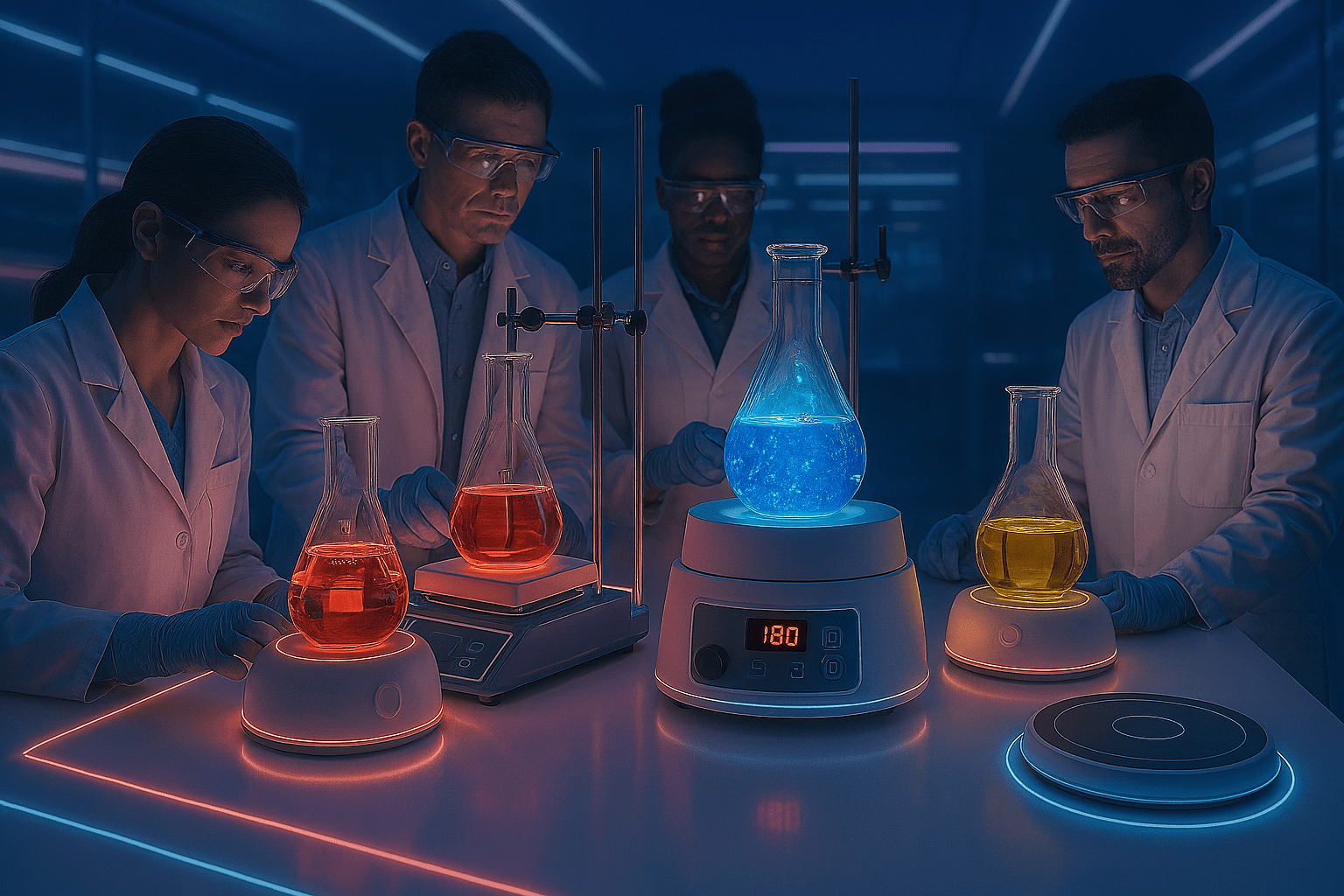
Selecting the right laboratory glassware for heating experiments is essential for safety, accuracy, and consistent results. Whether in a professional lab or a high‑school chemistry classroom, choosing appropriate heating vessels and equipment directly affects the quality of experiments and the learning experience. This guide explores the best lab glassware for heating, explains why flat‑bottom boiling flasks are often superior to round‑bottom options, and highlights the growing importance of magnetic heated stirrers and digital controlled heating mantles in science education and research.
Best Types of Laboratory Glassware for Heating Experiments
Heating is a fundamental part of chemistry. To ensure safety and reliability, only certain heat‑resistant lab glassware should be used. Here are the most common and effective options:
1. Beakers
Beakers are durable, affordable, and capable of handling gentle heating applications. Their wide shape allows good heat distribution, making them ideal for dissolving solids, warming solutions, and general mixing. In chemistry classrooms, beakers remain a top choice due to their versatility and ease of use.
2. Erlenmeyer Flasks
Erlenmeyer flasks are widely used in laboratories for heating because their conical design reduces splashing and improves heat retention. Their narrow neck helps control evaporation, making them perfect for mixing reactions, titrations, and crystallizations. Students benefit from their stability and reduced spill risk during heating.
3. Boiling Flasks
Boiling flasks—available in both flat‑bottom and round‑bottom designs—are specifically engineered for experiments requiring uniform heat distribution. These flasks, typically made from high‑quality borosilicate glass, are ideal for long‑duration heating, organic synthesis, and controlled reactions.
Why Flat‑Bottom Boiling Flasks Are Better Than Round‑Bottom Flasks for Many Heating Tasks
Both flat‑bottom and round‑bottom boiling flasks have their place, but flat‑bottom flasks offer several practical advantages—especially in modern laboratories and educational settings.
1. Superior Stability on Hot Plates and Lab Surfaces
Flat‑bottom flasks sit securely on hot plates, lab benches, or heating blocks without the need for extra clamps or supports. This reduces setup complexity and helps prevent tipping accidents, which is especially beneficial in teaching labs where students may be new to handling glassware.
2. Better Heat Contact on Flat Heating Surfaces
Most classroom and research settings rely on hot plates instead of open flames. Flat‑bottom flasks maximize surface contact with hot plates, which improves heating efficiency. Round‑bottom flasks, by design, require adapters or heating mantles to achieve the same level of uniform heating.
3. Easier Storage, Filling, and Handling
Flat‑bottom boiling flasks can stand upright when empty or full, making them extremely practical for sample preparation and storage. Teachers and lab technicians often prefer them when preparing multiple sets of materials because they are faster to load, label, and organize.
4. Greater Versatility for General Laboratory Use
While round‑bottom flasks excel in advanced organic synthesis setups like reflux and distillation, flat‑bottom flasks are better suited for everyday heating tasks, solution preparation, and instructional demonstrations that don’t require specialized apparatus.
The Importance of Magnetic Heated Stirrers in Laboratories and Classrooms
Modern labs benefit greatly from magnetic stirrer hot plates, which combine heating and automated mixing into a single device.
Key advantages include:
- Uniform heating — The constant motion prevents hot spots and improves solution consistency.
- Hands‑free mixing — Internal stir bars eliminate manual stirring, reducing contamination.
- Increased safety — No open flames, fewer moving external parts, and stable temperature control.
- Ideal for students — They allow safe observation of reactions while maintaining even heating.
For many educators and researchers, magnetic heated stirrers have become essential tools for improving experiment accuracy and safety.
Why Digital Controlled Heating Mantles Are Essential in Modern Chemistry Labs
Digitally controlled heating mantles provide unmatched temperature precision, making them invaluable for reactions requiring stable thermal conditions.
Benefits include:
- Accurate temperature control with digital readouts and feedback loops
- Consistent heating ideal for round‑bottom flasks or specialty glassware
- Built‑in safety features, including overheat protection and automatic shutoff
- Higher reproducibility, crucial for both research and teaching labs
Students gain experience using professional‑grade equipment, while instructors benefit from improved control and reduced risk.
Conclusion
The choice of laboratory glassware for heating experiments plays a crucial role in the safety and success of chemistry work. Flat‑bottom boiling flasks, with their stability and versatility, often outperform round‑bottom flasks for classroom and general laboratory heating tasks. Meanwhile, magnetic heated stirrers and digital controlled heating mantles have become essential tools for providing accurate, efficient, and safe heating in both educational and professional environments.

